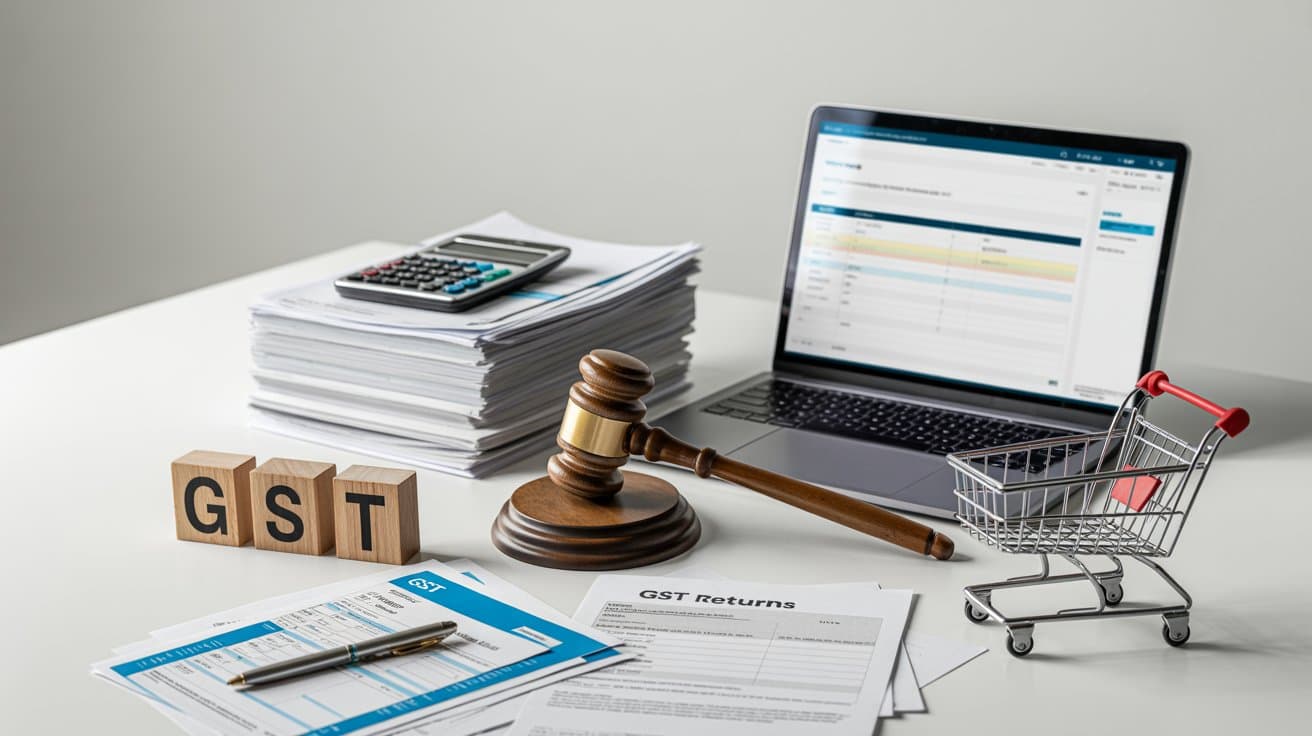
Taxation is one of the most critical yet often confusing aspects for new GeM sellers. From selecting the correct GST rate to issuing compliant invoices and filing accurate returns, every step directly impacts payments, catalog approvals, and overall business credibility. Mistakes in GST or tax details can cause delays in PFMS payments, catalog rejections, or even cancellation of orders by government buyers.
Selling on GeM requires strict adherence to tax regulations because every order is tracked, invoiced, and settled through transparent digital systems. Accuracy is therefore essential. Whether you are an MSME, manufacturer, reseller, or service provider, understanding GST rules is vital for smooth operations and timely payouts.
This guide outlines everything GeM sellers need to know about GST registration, tax applicability, invoicing requirements, return filing, and government deductions — along with how Tender Bharo ensures complete tax compliance for hassle-free business growth.
GST Requirements for Selling on GeM
GST registration is compulsory for most sellers who want to list products or services on GeM. Since government buyers require tax-compliant documentation, a valid GSTIN is essential for catalog approval. During registration and KYC, GeM verifies whether your PAN, GSTIN, and business name match exactly — any mismatch can result in failed verification or catalog rejection.
GST applicability depends on whether you are selling goods or services. Product sellers must apply the correct GST rate under HSN codes, while service providers need accurate SAC code mapping. Even small errors in classification or rates can cause order cancellations or financial losses. Because GeM emphasizes transparency, sellers must follow the proper tax structure for every listing to avoid compliance issues later.
This guide explains these requirements in detail and highlights how Tender Bharo supports sellers in ensuring complete GST compliance for smooth operations and timely payouts.
How GST Is Applied on GeM Orders
Every product or service listed on GeM must include GST according to its proper classification. Government buyers assess sellers based on the total price, which combines the base rate with the applicable GST. Since GST slabs differ across categories, sellers must ensure accurate mapping in line with official GST guidelines. Incorrect rates can lead to rejections, disputes, or mismatches during PFMS payments.
GST application also varies depending on whether the order is intra-state or inter-state. For intra-state supplies, the tax is divided into CGST and SGST, while inter-state transactions attract IGST. GeM automatically reflects this breakup based on the buyer’s and seller’s locations, but sellers must confirm that catalog rates and HSN codes are aligned with the correct tax structure.
In competitive bidding, GST directly influences price positioning. Sellers are required to quote financial bids inclusive of GST, ensuring transparency for buyers. Understanding how GST impacts the overall bid value helps businesses avoid underpricing or overpricing, thereby improving competitiveness in tenders.
With Tender Bharo, sellers receive expert guidance to ensure GST is applied correctly, reducing risks and enhancing compliance for smoother operations.
Invoicing Rules for GeM Sellers
A proper GST-compliant invoice is essential for receiving timely payments through PFMS. Sellers must issue invoices in the prescribed format, including all mandatory details such as buyer GSTIN, supply address, HSN or SAC codes, GST breakup, and the total payable amount. Missing or incorrect information can delay invoice approval and payment processing.
HSN or SAC codes must be precise because government systems automatically verify tax classifications. Errors in these codes may lead to invoice rejection. The GST breakup must correctly reflect CGST, SGST, or IGST depending on the type of transaction. Sellers should also ensure that invoice values match the order placed on GeM to avoid discrepancies.
Since PFMS enforces strict validation checks, generating accurate and error-free invoices is critical. Sellers who follow proper invoicing standards experience faster payment releases and fewer disputes with government departments.
GST Return Filing for GeM Sellers
Every GeM transaction must be reported in monthly or quarterly GST returns. Sellers are required to record outward supplies in GSTR-1 and reconcile them with tax payments declared in GSTR-3B. Accurate reporting ensures that sales align with PFMS payments and helps avoid penalties or notices due to mismatched data.
Because GeM transactions often involve interstate supplies, sellers must ensure IGST entries are correctly recorded. Missing or incorrect invoices can affect buyers’ input tax credit (ITC), leading to rejections or queries. Timely and consistent filing not only keeps sellers compliant but also strengthens their credibility in future government dealings.
Proper bookkeeping also supports reconciliation of TDS, TCS, or other adjustments imposed by government departments. Clean and synchronized GST records reduce compliance challenges significantly.
Tax Deduction (TDS/TCS) on GeM Transactions
Government buyers may deduct TDS on eligible purchases as per GST regulations. This deduction appears in the seller’s Form 26AS and can be claimed while filing returns. The deducted amount does not reduce the GST payable but is added to the seller’s credit ledger for adjustment.
In certain cases, TCS may also apply depending on the seller’s business type or turnover category. Sellers must carefully review buyer-side deductions and reconcile them with monthly GST filings. These deductions are part of government protocols designed to ensure transparency in high-value transactions.
Understanding TDS and TCS helps sellers avoid confusion when payments appear lower than invoice values. Proper reconciliation ensures that deducted amounts are correctly recorded and claimed back through returns.
With Tender Bharo, sellers gain expert support in managing invoicing, GST returns, and TDS/TCS reconciliation — ensuring compliance, accuracy, and smooth financial operations on GeM.
Tax Deduction (TDS/TCS) on GeM Transactions
Government buyers may deduct TDS on eligible purchases as per GST regulations. This deduction appears in the seller’s Form 26AS and can be claimed while filing returns. The deducted amount does not reduce the GST payable but is added to the seller’s credit ledger for adjustment.
In certain cases, TCS may also apply depending on the seller’s business type or turnover category. Sellers must carefully review buyer-side deductions and reconcile them with monthly GST filings. These deductions are part of government protocols designed to ensure transparency in high-value transactions.
Understanding TDS and TCS helps sellers avoid confusion when payments appear lower than invoice values. Proper reconciliation ensures that deducted amounts are correctly recorded and claimed back through returns.
With Tender Bharo, sellers gain expert support in managing invoicing, GST returns, and TDS/TCS reconciliation — ensuring compliance, accuracy, and smooth financial operations on GeM.
How Tender Bharo Helps Sellers Stay GST-Compliant
Tender Bharo plays a vital role in helping sellers avoid costly GST and taxation errors. The team ensures that every catalog is mapped with the correct HSN or SAC code and the appropriate GST rate, reducing the chances of catalog rejection or invoice disputes. They also review invoices thoroughly to guarantee compliance with both GeM and GST standards.
Tender Bharo helps sellers understand the tax implications for each category and ensures that pricing reflects the correct GST structure. It identifies mismatches between GST registration details and GeM profiles, assisting sellers in resolving issues before they disrupt orders or payments. For businesses struggling with tax reconciliation, Tender Bharo provides guidance on managing TDS, PFMS payments, and aligning GST returns.
By eliminating compliance mistakes and improving tax accuracy, Tender Bharo enables sellers to maintain a strong, trustworthy presence on GeM without facing delays or rejections due to taxation issues.
FAQs: Taxation and GST Implications for GeM Sellers
1. Is GST mandatory for all GeM sellers? Yes, GST registration is required for most sellers who want to list products or services on GeM. Since the platform operates under government procurement, tax-compliant documentation is essential. Only a few categories, such as certain artisan or handicraft sellers, may have exemptions. For manufacturers, traders, and service providers, a valid GSTIN is necessary for catalog approval and order processing.
2. How do I choose the correct GST rate for my product? The applicable GST rate depends on the product’s HSN code or the service’s SAC code. Each classification falls under a specific GST slab defined by the Government of India. Sellers should verify their HSN/SAC category through official GST notifications or seek expert guidance to avoid errors. Incorrect rates can lead to catalog rejection, invoice mismatches, or delayed payments.
3. What happens if I enter the wrong GST rate in my GeM catalog? Using an incorrect GST rate can cause serious problems such as order disputes, PFMS payment delays, or even cancellation by buyers. If a mismatch is found between the catalog rate and the actual GST rate, buyers may request corrections before proceeding. Repeated mistakes can damage credibility, so accuracy is essential from the start.
4. How should I raise GST invoices for GeM orders? Invoices must follow the standard GST format and include seller GSTIN, buyer GSTIN, HSN/SAC code, tax breakup (CGST, SGST, or IGST), quantity, price, and order ID. The invoice must exactly match the GeM order. Incomplete or incorrect invoices are often rejected, delaying PFMS payments. Using proper invoicing tools or support from Tender Bharo ensures compliance.
5. Does GeM charge TDS or TCS on orders? GeM itself does not levy TDS or TCS, but government buyers may deduct TDS as per GST rules when applicable. This deduction appears in the seller’s Form 26AS and can be claimed during return filing. TCS may apply in certain cases depending on turnover or business type. Reconciling these deductions is important for accurate financial records.
6. How is GST calculated during GeM bidding? During bidding, sellers must quote prices inclusive of GST. Buyers evaluate the total landed cost, so correct GST calculation is crucial. Miscalculations can make bids appear overpriced or underpriced, affecting competitiveness. Knowing the correct GST slab for your category helps in quoting accurately.
7. How do I handle GST for interstate vs intrastate orders? For intrastate transactions, sellers must apply CGST and SGST. For interstate supplies, IGST is applicable. GeM automatically reflects the breakup based on buyer and seller locations, but sellers must ensure their catalog and invoices follow these rules. Accurate tax breakup is vital for PFMS payment approval.
8. Can GST mistakes delay PFMS payments? Yes. PFMS has strict validation checks, and errors such as wrong GST rates, incorrect HSN codes, or mismatched invoice values often cause delays. Payments are processed only when tax details match the catalog and order. Ensuring accuracy prevents unnecessary hold-ups.
9. How do I report GeM sales in GST returns? All GeM invoices must be reported under outward supplies in GSTR-1 and reconciled in GSTR-3B. Since government payments may involve TDS, sellers must reconcile deductions and ensure matching entries. Proper reporting avoids penalties, notices, and ITC discrepancies for buyers.
10. How can Tender Bharo help with taxation compliance? Tender Bharo ensures correct HSN/SAC mapping, GST rate verification, invoice accuracy, and compliance with GeM taxation norms. It identifies mismatches in registration details, prevents catalog errors, assists with understanding tax slabs, and helps sellers avoid common GST mistakes that cause delays or disputes. With Tender Bharo, sellers remain fully compliant and reduce operational risks.
GST compliance is a critical aspect of selling on GeM, and understanding tax requirements helps sellers avoid major operational challenges. From proper GST classification to accurate invoicing and return filing, every step directly impacts payment timelines and seller credibility. When taxation is managed effectively, sellers benefit from faster PFMS payments, fewer disputes, and smoother order fulfillment.
With Tender Bharo, sellers gain expert support in navigating tax rules, selecting the right GST rates, managing compliance, and preventing costly errors. This allows businesses to focus on growth and sales while Tender Bharo ensures that every tax and GST requirement is handled with precision and professionalism.
For further information or assistance in exploring these opportunities, please feel free to Contact Us.
GST and Tax Compliance Guidelines for GeM Sellers :: Tender Bharo Solutions | Tendersbharo